Who he is
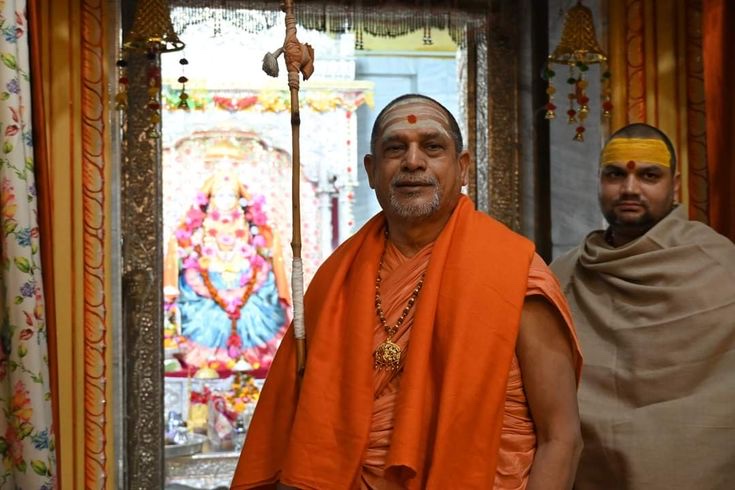
Swami Sadanand Saraswati heads the Dwarka Sharada Peetham in Gujarat. It is the western of the four monasteries that tradition credits to the philosopher Adi Shankaracharya, whom most historians date to the eighth century. Its heads carry the title Jagadguru Shankaracharya. He took up the seat in September 2022, after the death of his guru, Swami Swaroopanand Saraswati. That guru had led the Dwarka Peetham since 1982.
A Shankaracharya's role is unusual. He is not a priest of one temple, nor the founder of a new movement. He inherits a seat that is charged with keeping one branch of Vedic learning alive and with teaching Advaita Vedanta, the non-dualist philosophy that Shankara set out. Sanatana Hindu opinion also treats the four Shankaracharyas as spokesmen on matters of dharma, so their statements are reported widely.
What makes Sadanand's story notable is how long he stayed with one teacher. Contemporary reports say he reached his guru's ashram at Jhoteshwar as a youth around 1970, and he stayed in that circle until the guru died in 2022. In those years he was a student, a brahmachari, a dandi sannyasi and, from the mid-1990s, the guru's representative at Dwarka. When the succession was announced, he was not an outsider but the person who had managed the western seat's affairs for years.
Sadā means “always” and ānanda means “bliss”. It is the monastic name he received at initiation. Saraswati is the name of his branch of the Dashanami order.
Background and early life
He was born Ramesh Awasthi in Bargi, a village in Narsinghpur district of Madhya Pradesh. Several news organisations reported this at the time of the 2022 succession, including Patrika, ETV Bharat and Asianet News. Patrika gives the year of birth as 1958 and places Bargi near Karakbel in Gotegaon tehsil. No exact date of birth has been published.
According to the same Patrika report, his father was Pandit Vidyadhar Awasthi, a physician (vaidya) known in the area, and his mother was Mankunwar Bai. He was the youngest of their children.
Narsinghpur lies in the Narmada valley, a region with deep links to his future guru. Swami Swaroopanand Saraswati had founded the Paramhansi Ganga Ashram at Jhoteshwar in the same district, and it became the guru's main base in central India. So Sadanand's path did not take him far from home. The ashram where he studied as a boy is the same place where his guru's samadhi now stands.
When he joined the ashram
Accounts differ on his age. Patrika's detailed profile of 18 September 2022 says he left school after class eight, at about twelve, and reached Jhoteshwar in 1970 to study Sanskrit. Other reports from the same week, including an earlier Patrika piece, ETV Bharat and Asianet, say he came to the guru at eighteen and then took brahmachari initiation. One possible reading is that he arrived as a boy and was initiated some years later, but no source says this outright. This site therefore says only that he joined the ashram as a youth, around 1970.
Almost everything published about his early life comes from Hindi-language regional press in September 2022. Where only one outlet reports a detail, this page says so.
Education and training
His formal schooling ended early. His real education was the traditional one of a monastic student: Sanskrit first, then the shastras, learned in residence with teachers rather than in a university.
Patrika reports that he studied Sanskrit at Jhoteshwar from 1970. Between 1975 and 1982 he was at the ashram while the Tripura Sundari temple there was being built. He then spent about eight years in Varanasi studying the shastras. Varanasi has been one of the great centres of Sanskrit learning for centuries. It is also where he later received his dandi sannyas.
These details come from one detailed profile and should be read as such. They fit what is known of the training of Dashanami monks. Those monks usually study the prasthana-traya (the Upanishads, the Bhagavad Gita and the Brahma Sutras) with Shankara's commentaries, along with Sanskrit grammar and logic.
Patrika and the religious portal BhaktiBharat also say that he has written or translated about twelve books in Hindi, Sanskrit, Gujarati and English. We could not verify the titles, so none are listed here.
The “three starting points” of Vedanta: the Upanishads, the Bhagavad Gita and the Brahma Sutras. Shankara wrote commentaries on all three.
The guru: Swami Swaroopanand Saraswati
You cannot understand Sadanand without his teacher. Swami Swaroopanand Saraswati was born Pothiram Upadhyay on 2 September 1924 in Dighori village, Seoni district, Madhya Pradesh. As a young renunciant he joined the Quit India movement and was jailed twice, for nine months and then six. Newspapers later called him the “revolutionary sadhu”.
He became Shankaracharya of Jyotirmath in 1973 and of the Dwarka Sharada Peetham in 1982, and headed both seats until his death. That was unusual. For four decades the western seat was led by an acharya whose attention was divided between Gujarat, the Himalaya and his ashram in Madhya Pradesh. This helps explain why a trusted resident representative mattered so much at Dwarka.
Swaroopanand died on 11 September 2022 at the Paramhansi Ganga Ashram, Jhoteshwar. News reports gave his age as 98 or 99. The next day he was given bhu-samadhi (burial in the earth, the rite for sannyasis) with state honours.
Swaroopanand held Jyotirmath (north) from 1973 and Dwarka (west) from 1982. In 2022 the two seats went to two different disciples.
Major phases of his life
From the documented record, his life falls into four phases. Each is told in more detail on the Life & Journey and Spiritual Journey pages.
- Village and family (1958 to about 1970). Childhood in Bargi as the youngest child of a village physician.
- Student and brahmachari (from about 1970). Sanskrit at Jhoteshwar, study of the shastras in Varanasi, and initiation as “Brahmachari Sadanand”.
- Representative and dandi sannyasi (1990s to 2022). Reported as the Shankaracharya's representative at Dwarka from 1995. Dandi sannyas in Varanasi, which Patrika dates to 2003, made him “Dandi Swami Sadanand Saraswati”.
- Shankaracharya (from 2022). Named successor on 12 September 2022 and enthroned at Dwarka that October. Since then he has taught publicly, travelled, attended the Maha Kumbh and spoken on questions of dharma.
Historical context
He took office at a sensitive moment. Two seats were filled at once from one guru's circle, and the Jyotirmath side of that succession went to litigation before the Supreme Court of India. That case is about the northern seat, not Dwarka. We found no court challenge to Sadanand's appointment. Some voices in the wider tradition did, however, question the 2022 announcements in general.
It was also a time when India's great religious events had a large public profile: the consecration of the Ayodhya Ram temple in January 2024 and the Prayagraj Maha Kumbh in early 2025. On both occasions the Shankaracharyas' views were widely reported. The Teachings page records what he actually said.